Buying Guides · November 6, 2026 · 4 min read
How to Buy Vintage Signed Jewelry: A Collector’s Guide
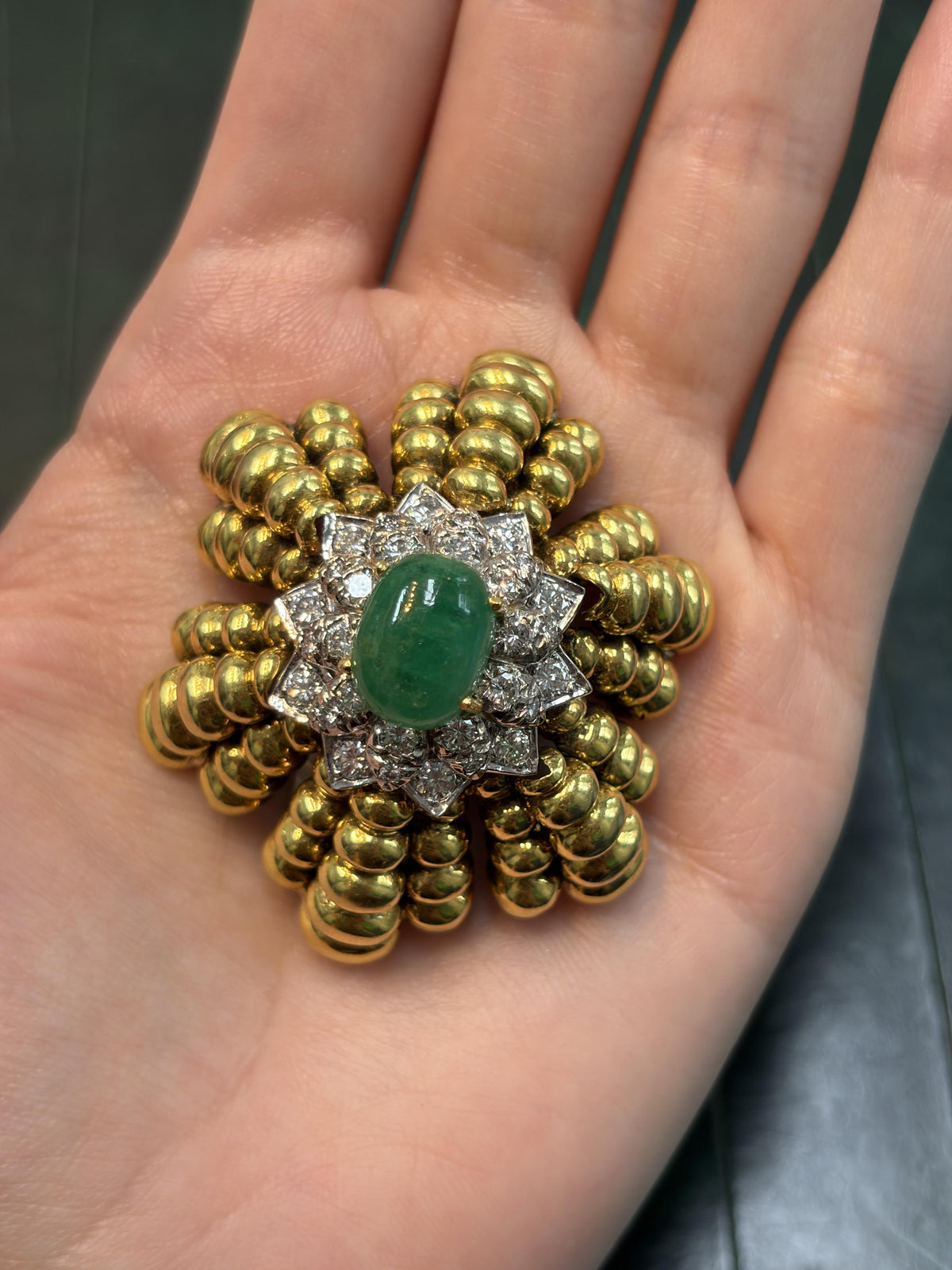
A signed jewel from a great house carries two kinds of value: the beauty of the piece and the certainty of where it came from. The second is what a buyer pays for, and it is also where most mistakes are made. Here is how we look at a piece before it joins the collection, and what we suggest every collector checks, wherever they buy.
Start with the signature
A signature is the house’s name struck or engraved on the piece: on the clasp, the back of a brooch, the inside of a ring or a bracelet. On the major houses it is usually accompanied by a serial number. Both should look like they belong to the piece and to its period.
- Style and placement. Each house signed differently over the decades, and the city often appears with the name: Paris, London or New York. A signature that is too modern for the period of the design is a warning sign.
- Quality. House signatures are crisp, evenly spaced and well placed. Shallow, uneven or crooked lettering deserves a closer look.
- Wear. A signature on a piece worn for fifty years should be worn too, in the same way as the metal around it. A sharp signature on a soft, worn surface may have been added later.
Signatures can be added to unsigned pieces, and signed parts can be married to unsigned ones. The signature is the beginning of the examination, not the end of it.

Read the marks
Beside the signature, most jewels carry marks that tell you where and in what metal they were made. They should agree with the signature.
- France. French gold has been marked with the eagle’s head since 1838, and platinum with the dog’s head since 1912. French pieces also carry the maker’s mark of the workshop, in a lozenge. Many Paris houses had their jewels made by independent workshops, and that maker’s mark is part of the story.
- Italy. Italian pieces carry the fineness (750 for 18 karat gold) and a star with a number and a province code identifying the maker.
- Great Britain. British hallmarks combine a sponsor’s mark, the fineness, the assay office and often a date letter.
- United States. American pieces have no state assay system. They are marked with the karat (14K, 18K) or PLAT, alongside the signature.
A piece signed by a Paris house but marked in a way no French workshop would mark it, or a 1930s design struck with a fineness mark that only appeared decades later, needs an explanation.
If you want to go deeper on French marks, our guide How to Read French Gold Hallmarks walks through them one by one.

Look at the construction
The great houses worked with the best workshops of their time, and it shows in places most people never look: the back of a brooch, the hinge of a bracelet, the inside of a link. Look for clean, even finishing, well-made settings, a clasp that closes with a firm, precise feel, and a weight that matches the size of the piece. Copies are usually lighter, rougher on the reverse and simpler in the mechanisms.
Check what has changed
A vintage jewel has lived. Some changes are normal; others affect value, and all of them should be disclosed.
- Stones. Replaced stones are common, especially in pavé or in colored gem jewels. A replacement in the right cut and quality is acceptable when disclosed; a modern cut in an Art Deco piece is not invisible to a collector.
- Alterations. Rings are resized, clip earrings converted to posts, brooches turned into pendants. Each changes the piece, and some lower its value.
- Repairs and restoration. Look for solder at joints, re-tipped prongs and restored enamel. Enamel in particular is fragile, and restoration affects value.
- Surface. Heavy polishing softens edges, signatures and engraving. Original finish is worth preserving.
Documents that help
Papers do not make a piece authentic, but the right ones add confidence and value.
- Original box and receipt from the house.
- Archive confirmation. Several houses can examine a piece and compare it with their records, usually for a fee.
- Laboratory reports from GIA, AGL, SSEF or Gübelin for important stones. For colored gems, a report stating origin and no indication of heating can change the value of a piece considerably.
- Provenance: a known collection, an auction record, a photograph of the piece being worn.


What makes the price
Two pieces that look alike can be worth very different amounts. The house, the period and the rarity of the design come first. Then the signature and serial number, the condition and originality of the piece, the quality of the stones, the weight of gold or platinum and, where it exists, the provenance. A piece that is complete, unaltered and well documented will always lead.

Where to buy
Buy from someone who examines pieces in person and stands behind what they sell. Ask how the piece was verified, what has been changed, and what happens if a question arises after the sale. At auction, read the catalogue description closely: “signed” and “attributed to” do not mean the same thing, and the buyer’s premium is added to the hammer price.
How we work at Odeon
Every jewel in our collection is examined for its signature, its marks, its period and its craftsmanship before it is offered, and we describe what we see, including what has changed. If you would like to see a piece in person, in our salon at 608 Fifth Avenue or by video, book a private viewing.

Explore the signed jewels in the collection: Cartier, Van Cleef & Arpels, Bulgari and Tiffany & Co.
A jewel in mind?
Looking for a particular piece? We find jewels for collectors every week.
The Journal


