
How to Read French Gold
A guide to French hallmarks — eight centuries of authentication, explained.
By Odeon Collection
There is a moment, familiar to anyone who has spent time with European vintage jewelry, when you turn a piece over and find a small mark pressed into the gold. A tiny animal. A geometric shape. A set of initials inside a lozenge.
If you know what you're looking at, that mark tells you almost everything: where the piece was made, what the metal is, what the fineness is, who made it, and whether the French state has independently verified the content.
If you don't know what you're looking at, you pass over it.
This guide exists so you don't pass over it.
France built one of the most rigorous hallmarking systems in the world. The logic is simple and ruthless: you don’t buy on trust. You buy on a government punch—pressed permanently into metal after an assay office verifies fineness.
Why France Built the System
The story begins not with jewelry but with money.
In medieval Europe, gold was currency. Purity determined value, and the temptation to debase—mixing cheaper metals into gold and selling the result as pure—was constant. Over centuries, France developed increasingly strict controls; by the 19th century, the modern framework was standardized and centralized.
A pivotal reform came in the 19th century: the system that introduced the modern, recognizable guarantee symbols—like the eagle’s head for 18k gold—became the backbone collectors still rely on today.
"When you buy a French-hallmarked piece, you are not buying on trust. You are buying on documentation pressed permanently into the metal."
— Odeon Collection
How the French System Works
Before cataloguing the marks themselves, it helps to understand the logic. France uses distinct categories of marks:
The Maker's Mark — Poinçon de Maître
Identifies who made the piece. Registered by the maker with the French assay office. In France, this mark is typically in a lozenge (diamond-shaped) cartouche, containing initials plus a differentiating symbol.
The Guarantee Mark — Poinçon de Garantie
Applied by the French state after assay confirms fineness. Not the maker’s word—the government’s.
Import / Control Marks (for foreign or special cases)
Marks used for imported items and particular categories (e.g., certain import situations, chain marks, inventory-related controls depending on era).
The Marks, Illustrated
The Eagle's Head
Poinçon de Garantie · 18 Karat Gold (750) · Standardized in 1838

Image source: DSF Antique Jewelry (hallmark guide).
| What it is | Primary French guarantee mark for 18k gold — 750 parts per thousand pure gold |
| Guarantees | Assayed and guaranteed by a French assay office |
| Where to find | Inner ring shank, inside clasps, back of brooch fittings, earring posts |
What It Looks Like on a Piece
18k Gold · Hallmark Placement Example

Image source: DSF Antique Jewelry (example photo).
On real pieces, the guarantee mark is often tiny and placed where it won’t interrupt design. This is why a loupe (10× minimum) and angled light matter.
The Maker's Mark
Poinçon de Maître · Lozenge Cartouche
| What it is | The registered signature of the individual goldsmith or manufacturer |
| Appearance | Initials plus a symbol (différend) inside a lozenge (diamond) cartouche |
| Why it matters | It’s provenance. It’s traceability. It’s the route back to an atelier. |
The Owl
Import / Chance Hallmark · Introduced 1893

Image source:legemmologue.com
| What it is | A hallmark stamped on imported gold objects (and used in certain “chance”/secondary-market scenarios) |
| What it tells you | Foreign origin or special assay-office pathway—still a French control mark |
The Weevil
Import-Related Mark (varies by era)
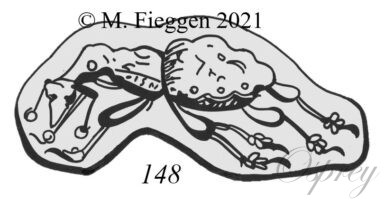
Image source: Osprey Paris (hallmark reference).
| What it is | A French mark used on imported gold/silver objects (usage depends on date/format) |
| Era notes | Examples documented by Osprey include Paris 1838–1864 for a shaped-border version; later variants exist by period. |
The Rhinoceros
Remark Mark · Chains & Flexible Bracelets (by era)
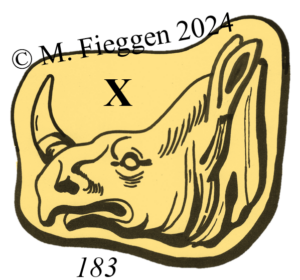
Image source: Osprey Paris (hallmark reference).
| What it is | A “remark” hallmark associated with chains and flexible bracelets, stamped at intervals (by period) |
| Why it matters | It’s not an import hallmark. It’s a control/remark punch that changes what you should look for next (construction type, repeated stamping, etc.). |
Platinum: The Dog’s Head
Platinum Guarantee Mark (by era) · Decree of 1912 referenced in hallmark literature
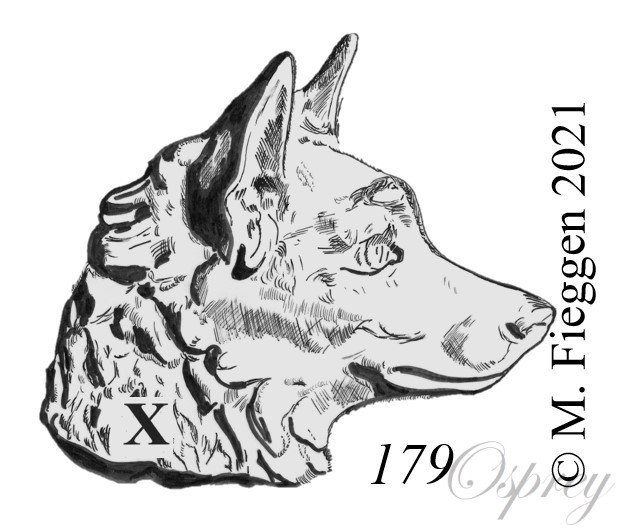
Image source: Osprey Paris (hallmark reference).
| What it is | A hallmark used for platinum objects, with fineness rules that vary by period |
| Collector note | If you’re examining an Art Deco white-metal piece, confirming the platinum hallmark is the difference between “white gold look” and true platinum. |
Gold Content by Karat
France expresses fineness as parts per thousand. For vintage buyers, the practical takeaway is simple: French fine jewelry is overwhelmingly 18k (750), and the hallmarking system is designed to make that legible at a glance—once you know the language.
| Fineness | Percent | Karat | Common French Guarantee Mark |
|---|---|---|---|
| 750 | 75.0% | 18k | Eagle’s head |
| 585 | 58.5% | 14k | (varies by period) |
| 375 | 37.5% | 9k | (varies by period) |
Reading the Cartouche Shape
French marks are not just images—the surrounding shape carries information. Identify the shape before reading the symbol inside it.
| Lozenge (diamond) | Maker’s marks (poinçon de maître) |
| Oval / shaped borders | Guarantee and control marks (varies by era and metal) |
| Other / irregular | Earlier systems, specialized trade marks, or period-specific punches |
How to Examine a Piece
Find the marks
Use a 10x loupe minimum. Look on inner ring shanks, inside clasps, back of brooch fittings, earring posts. Marks are placed for authentication, not decoration.
Identify the cartouche shape
Lozenge = maker. Guarantee/control marks vary by symbol and period. Shape tells you what question the mark is answering.
Read the guarantee/control mark
Eagle’s head is your most common “French 18k” anchor. Then look for other control marks (owl, weevil, chain marks) that add context.
Then read the maker’s mark
Note initials + symbol inside the lozenge. That combination is the “address” of the workshop in reference books and assay archives.
A Note on Condition and Wear
Hallmarks wear. On pieces worn daily for decades, the eagle’s head can become faint. That’s not unusual—and genuine wear patterns often read as more convincing than “too crisp” stamps on an allegedly antique piece. When a mark is nearly gone, XRF analysis can confirm metal content independently.
Why This Matters
French hallmarking is one of the cleanest authentication trails in vintage jewelry. When the marks are present and legible, you get purity verification, maker traceability, and—often—historical context about how the piece moved through markets.
When you buy a French-hallmarked piece, you are not buying on trust. You are buying on documentation pressed permanently into the metal.
The mark is small.
The certainty is not.
Further Reading
For deep reference work, hallmark specialists commonly rely on dedicated hallmark literature and assay-office documentation. Osprey Paris publishes extensive illustrated references; specialist dealers also publish practical collector guides.


Leave a comment
This site is protected by hCaptcha and the hCaptcha Privacy Policy and Terms of Service apply.