Buying Guides · November 6, 2026 · 2 min read
Signed or Unsigned? What a Signature Means in Vintage Jewelry
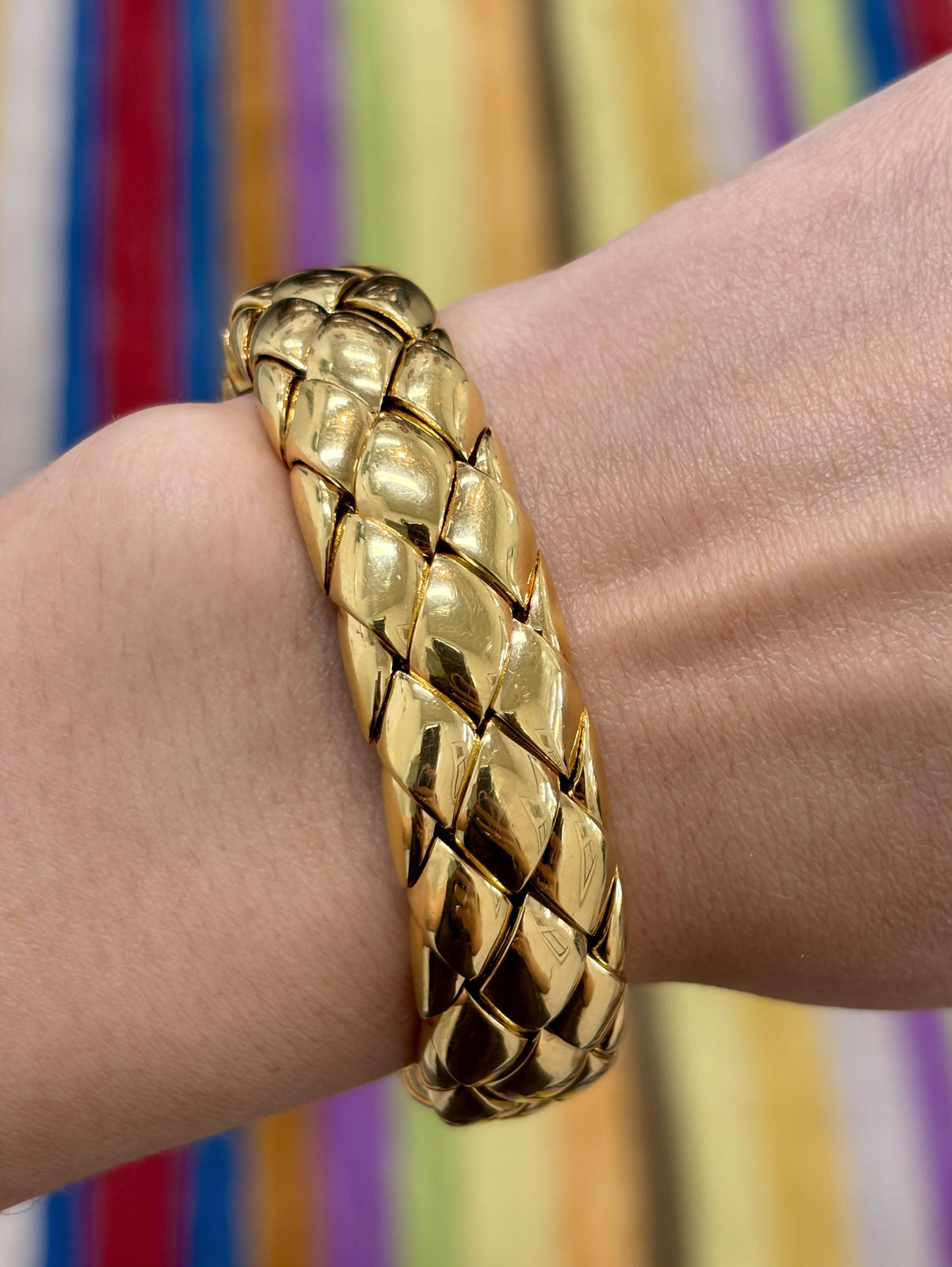
A signature from Cartier, Van Cleef & Arpels or Bulgari can multiply the value of a jewel. Yet some of the finest jewels ever made carry no name at all. Understanding the difference is one of the most useful things a collector can learn.
What a signature adds
A house signature tells you who designed the piece, who stood behind its quality and, with a serial number, often when it was made. It connects the jewel to a history and to a market of collectors who look for that name. That is why a signed piece usually sells for considerably more than a comparable unsigned one, and why signatures are worth verifying with care.
Why so many great jewels are unsigned
- Before the twentieth century, signing was rare. Most Georgian and Victorian jewels, however fine, carry no maker’s name. They are judged by their workmanship, their stones and their period.
- The workshops behind the houses. Many great houses had their jewels made by independent workshops, which also made pieces under their own name or for private clients. These can be of exactly the same quality as signed work.
- Designers who chose not to sign. Suzanne Belperron rarely signed her work: her style was her signature. Her jewels are identified by design and by archive.
- Private commissions and remounts. Families often had jewels made or reset by a local jeweler, sometimes with stones of great importance.

“Signed”, “attributed to” and “in the manner of”
These words do not mean the same thing. Signed means the house name is on the piece. Attributed to means a specialist believes the piece was made by a given house or designer, on the evidence of its design, construction or archive, without a signature. In the manner of or in the style of means only that it looks like the work of that house. Read descriptions closely, at auction and elsewhere.
How to judge an unsigned jewel
Without a name, the piece has to speak for itself.
- Workmanship. Look at the back as well as the front: the finish of the gallery, the precision of the settings, the hinges and clasps.
- Stones. Old cuts, natural pearls and untreated colored stones carry their own value, and a laboratory report can confirm it.
- Marks. Assay marks and maker’s marks can still tell you where and when a piece was made, and sometimes by which workshop.
- Period and coherence. The design, the cut of the stones and the construction should all belong to the same time.

Value for money
Because the market pays a premium for names, an unsigned jewel of the same quality often costs much less than a signed one. For a collector who buys with the eye, that is an opportunity: an exceptional Victorian diamond ring or an Art Deco brooch from a great Paris workshop can be found for the price of a modest signed piece.


At Odeon
We offer signed jewels from the great houses and unsigned jewels chosen for their quality, their stones and their period, and we describe each one for exactly what it is. See our unsigned jewels, our signed pieces from Cartier, Van Cleef & Arpels and Bulgari, or read How to Buy Vintage Signed Jewelry.
A jewel in mind?
Looking for a particular piece? We find jewels for collectors every week.
The Journal


