Suzanne Belperron
Suzanne Belperron — The Designer Who Refused to Sign

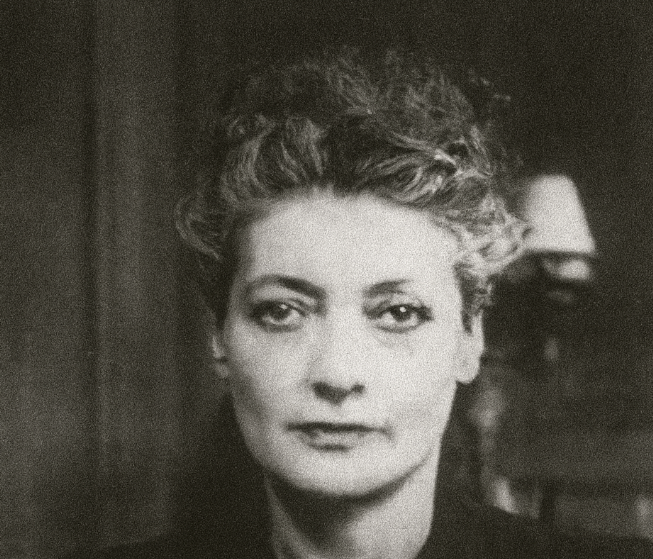
Portrait of Suzanne Belperron. Image courtesy of Belperron.
Asked once why she never signed her work, Madame Belperron replied, "My style is my signature." It was a declaration of total artistic confidence, and it would define a career that challenged every convention of 20th-century jewelry design. Born Suzanne Vuillerme in 1900, she became one of the most influential designers in the history of fine jewelry — yet her name remained largely unknown for decades.
The paradox was intentional. She worked in the shadows of the Parisian jewelry world, creating pieces unmistakably hers, signed by no one. This refusal to sign was not modesty but supreme confidence in her distinctive aesthetic vocabulary.
In the rarefied world of signed vintage jewelry — where names like Cartier, Van Cleef, and Bulgari command immediate recognition — Belperron pieces present a different proposition entirely. They must be recognized by style alone: sweeping curves, architectural volume, a geometry that broke every rule of the period while never losing its elegance. For the specialist dealer, this creates both challenge and opportunity. The educated eye learns to spot her hallmarks: the bold use of semi-precious stones, the sculptural volumes, the distinctive patinated gold surfaces.
The Boivin Foundation

Vogue Paris, 1928, featuring four Boivin jewels by Belperron. Image courtesy of Belperron.
In March 1919, soon after her move to Paris at the beginning of the "Golden Twenties," Belperron was taken on as a modelist-designer by Jeanne Boivin, the widow of René Boivin. The Maison Boivin, established in 1890, had lost its founder in 1917, and Jeanne had taken the reins herself — a rarity in the trade, a house run by a woman, designed increasingly by women. In 1924, at the age of 23, Belperron became codirector of the maison.
Her years at Boivin provided the foundation for what would become her revolutionary approach to jewelry design. In her early work for Boivin, we see the influence of Art Deco — the carvings are often geometrically stepped. Progressing into the 1930s her forms become more rounded. But even then, her work possessed an unmistakable modernity that set it apart from her contemporaries.
Seeking to make a name for herself and rebelling against this culture of anonymity, Suzanne resigned her position with Maison René Boivin in 1932, accepting a position working with pearl and gemstone merchant Bernard Herz as their exclusive, and more importantly, recognized designer.
The Herz Partnership and Wartime Trials

The Duchess of Windsor, wearing Belperron. Image courtesy of Belperron.
The collaboration with Bernard Herz marked Belperron's emergence as a major creative force. Belperron maintained her shop at 59 rue de Châteaudon where clients privately viewed her jewels by appointment. Her clients received the address discreetly, by word of mouth, and notables such as Elsa Schiaparelli, Fred Astaire and the Duchess of Windsor called on her personally to make their selections.
The partnership faced its greatest test during World War II. When the Gestapo came to arrest Bernard Herz, Belperron is said to have swallowed part of his address book in the taxi, protecting his clients from exposure. Herz was interned, and Belperron took over the company — not to claim it, but to keep it from being dissolved and to protect his clientele. She kept the business running well enough to sustain his affairs in his absence: his estate in Chantilly, his apartment on Avenue du Président-Wilson, and the staff at both, along with the needs of his children, Jean and Aline.
She never stopped hoping he would return. Everything was kept exactly as he had left it, waiting for a homecoming that never came. In a letter dated February 21, sent from the Drancy internment camp, Herz wrote to her:
"A sad Sunday, I am bored, I am bored; to get through it I need to talk a little with you... I do not regret having stayed in Paris; the absence will be shorter. If I had to do it again, I would do it again. Forgive me for all the trouble I am causing you; I only cause you trouble, when I would have so much liked to make you happy. Thank you for everything. Bernard"
Herz did not survive the war. The Germans confiscated the company outright; to keep it, Belperron was forced to purchase it back from the German authorities. After the war, she became its sole and full owner. Out of love for the friend she had lost, she later gave half of the company back to his son Jean — who returned from the camps as a prisoner of war — for the symbolic sum of one franc.
The Belperron Aesthetic

Yellow diamond and gold suite, 1945, from the Odeon Collection. Authenticated by Olivier Baroin, the official expert on Suzanne Belperron and custodian of her rediscovered archives.
Belperron's genius lay in her material choices and sculptural approach. She loved mixing precious stones with semi-precious ones, often within the same piece — diamonds set beside rock crystal, gold beside agate, color thrown against color without apology. Among her favorite semi-precious stones were chalcedony and citrine, and she made full use of their various optical qualities by carving an entire piece out of stone, often in complex, swirling or stepped design. She was also quite fond of oddly-shaped pearls, which were set directly into the agate, creating a subtle contrast of textures without the intrusion of metal.
Madame Belperron frequently worked with 22 karat gold, which was hammered and burnished to achieve a uniquely raw texture. At times she did the hammering herself, striking the gold by hand until the surface held exactly the texture she wanted. This treatment gave her gold work an ancient, almost archaeological quality that set it apart from the polished perfection of traditional high jewelry.
Her rings were where the sculptural instinct showed most — each one a form first, a ring second, built from curvilinear lines and circles, bold geometry pushed right to the edge of convention. But the boldness never tipped into excess. Her brooches and necklaces possessed the same restraint: architectural, sculptural, compelling even unworn, and always — despite the volume, despite the audacity — elegant. Karl Lagerfeld, among her most devoted collectors, was photographed wearing her jewelry for decades.
Market Recognition and Collector Appeal

Courtesy of Christie's
The market's belated recognition of Belperron's genius began with the 1987 auction of the Duchess of Windsor's jewelry collection at Sotheby's Geneva, which achieved $50 million, the highest price to date for a single person's jewelry collection. The 250-lot catalog featured 16 pieces by Belperron, although only five were correctly attributed at the time. This auction was the prelude to renewed interest in Belperron jewelry.
Recent auction results demonstrate the market's sophisticated appreciation for her work. A Suzanne Belperron bib necklace featuring topaz, morganite, aquamarine and diamond achieved $825,500, more than twice its highest pre-sale estimate at Sotheby's December 2025 sale. At Christie's "Magnificent Jewels" sale in New York in December 2018, a "tube" bracelet in platinum and 18-carat white gold adorned with old-cut diamonds soared to $852,500, while its initial estimate was between $200,000 and $300,000.
For the contemporary collector, Belperron represents the ultimate insider's choice — a name whispered among those who know, rather than announced to those who don't.
The authentication challenge that once obscured her market presence now adds to her appeal among sophisticated collectors. Groëné et Darde produced her designs and marked them with their maker's mark, a stamp the trained expert can read to date a piece with precision. Understanding these maker's marks, recognizing her distinctive aesthetic vocabulary, knowing the periods of her various partnerships — this specialist knowledge becomes part of the collection's value proposition.
"Her jewelry is so wearable and modern. It's tactile and sculptural, and because of this, it has a remarkable relevance today. It's sort of miraculous how ahead of her time she was as far as her aesthetic."Nico Landrigan, President of the Belperron Brand
In refusing to sign her work, Belperron created the most distinctive signature of all — absolute confidence in her vision.
Written by Olivia Aurtenechea, with thanks to Olivier Baroin, official expert on Suzanne Belperron and custodian of her archives, for his review and contributions to this piece.

1 commentaire
Thank you four this moving tribute to Mr Bernard Herz
Olivier Baroin
Laisser un commentaire
Ce site est protégé par hCaptcha, et la Politique de confidentialité et les Conditions de service de hCaptcha s’appliquent.