
Jeanne Toussaint - Cartier
Jeanne Toussaint — The Panther of Cartier
The woman who transformed jewelry from decoration into declaration
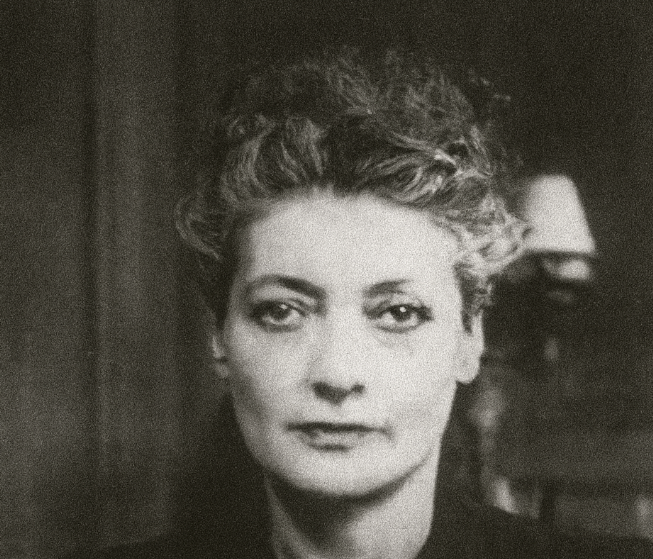
Born in Belgium in 1887, Jeanne Toussaint arrived in Paris with nothing but ambition and an eye for the extraordinary. The city was electric with possibility. Art Nouveau was yielding to new forms. Society was reshuffling its cards.

Toussaint found her place among the makers and breakers of taste. Her evenings belonged to Maxim's, the belle époque restaurant on the rue Royale where fashionable Paris went to see and be seen. She and Coco Chanel became inseparable across its tables, less acquaintances than confidantes. The illustrator George Barbier moved in the same orbit. And it was over one of those dinners that she was introduced to Louis Cartier. Here was a woman who understood that jewelry could be more than ornament. It could be power.
What grew between her and Louis became one of the long love affairs of the period—devoted, and never made official. His family judged her background unsuitable for a Cartier marriage, and in 1924 he wed a Hungarian aristocrat. It changed little. They remained together, traveling as companions, until his death in 1942.
Louis Cartier was enthralled with Toussaint and her taste for fashion. In 1913, he hired her to coordinate his company's accessories. Twenty years later, she became director of haute joaillerie at Cartier Paris in 1933. The first woman to ever hold such a position in the jewelry industry.
The Architecture of Instinct
Louis Cartier affectionately called her “Ma petite panthère”. The nickname wasn't casual. Toussaint lived in an apartment full of panther skins and wore a gleaming coat made of panther fur. She had found her animal.
Under Toussaint's guidance in the 1930s, Cartier began to move away from abstract Deco designs and into figurative work. The panther first appeared on a Cartier watch in 1914, but under Toussaint's direction, it evolved into something far more ambitious.
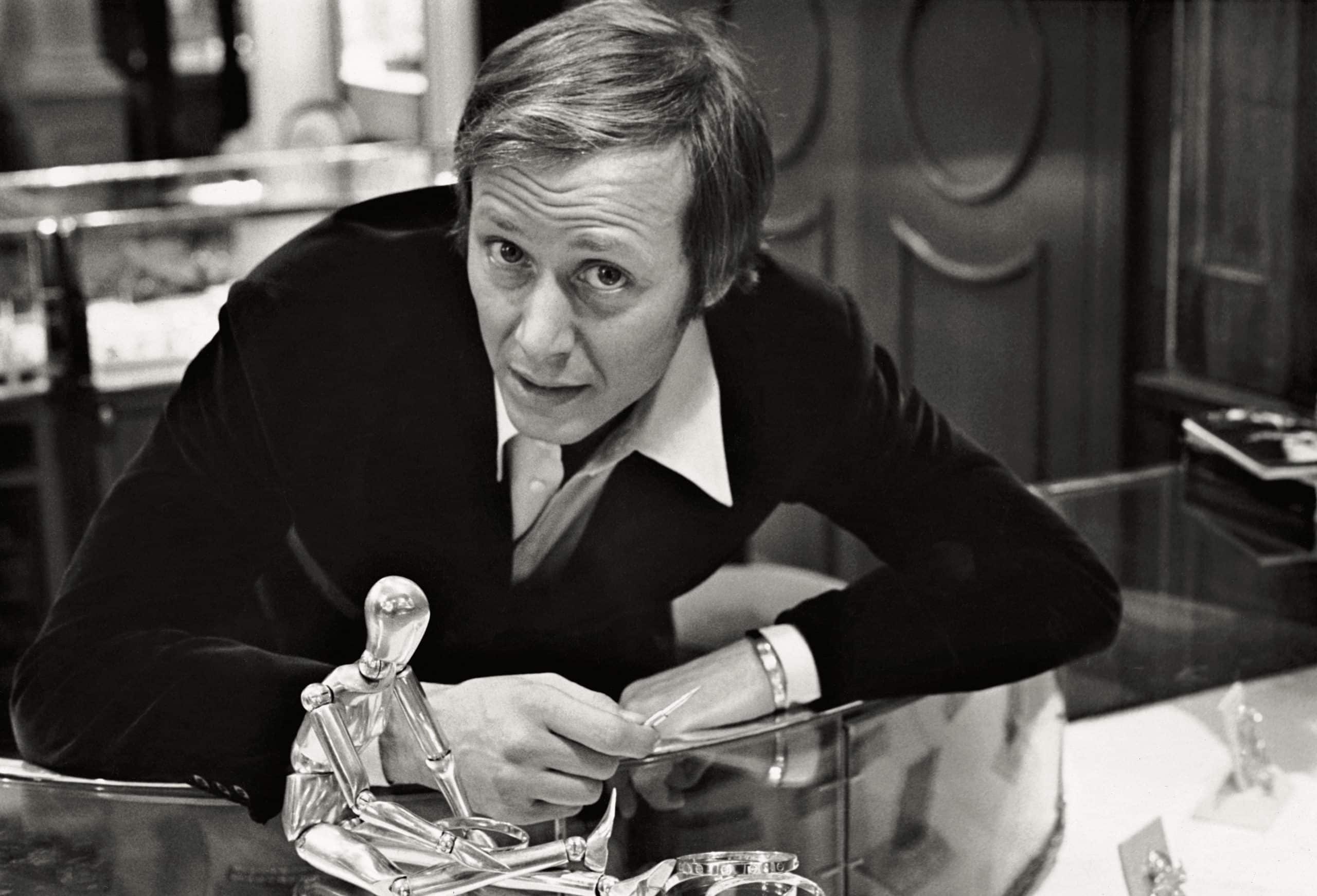
It's completely Toussaint's influence of course—she is the inspiration of us all.
The 1948 Panthère brooch for the Duchess of Windsor, Wallis Simpson—a gold panther spotted in black enamel, outstretched on a 116.74-carat cabochon emerald from the Duke's own stones. The first three-dimensional panther Cartier ever made. The piece wasn't jewelry. It was manifesto.
A year later came its counterpart: a panther clip, its spots set in sapphire, seated on a 152.35-carat Kashmir sapphire.

In December 1952, the Duchess purchased the articulated onyx and diamond panther bracelet—the most technically ambitious piece of its era. The bracelet allowed the panther to wrap around the wrist, transforming static precious metal into living sculpture.
Beyond the Menagerie
Toussaint's vision extended beyond big cats. She made Indian jewelry stylish in the 1930s when she brought back yellow gold as a fashionable metal for jewels. Her passion for Mughal-era craftsmanship led to a revival of Cartier's Tutti Frutti collection in the late 1950s.
During the occupation, her defiance took symbolic form. She displayed the “Caged Bird” in the Cartier windows on the rue de la Paix—a small bird behind the bars of a gilded cage, a caged France in plain sight. The gesture did not go unnoticed. She was arrested and held by the occupying authorities, and released only through the intervention of Coco Chanel, whose reach extended where few others' did. When Paris was liberated in 1944, she answered it—the same bird, now singing at the open door of its cage, wings spread, in the coral, diamond, and lapis of the French flag.

In recognition of her contribution to jewelry and design, she was awarded the Grand Cross of the Legion of Honour in 1955. The honor was deserved. She had changed how the world understood luxury.
Market Memory
The auction records tell Toussaint's story in numbers that still astonish. The 1952 Cartier panther bracelet set with diamonds and onyx sold for £4,521,250 at Sotheby's London in 2010 — more than three times its high estimate of £1.5 million.

The 1987 Sotheby's Geneva sale of the Duchess of Windsor's jewelry realised over $50 million against a pre-sale estimate of approximately $7.5 million. The market had spoken. These weren't just jewels. They were artifacts of a revolution in taste.
Today, serious collectors understand what Toussaint created. The panther pieces remain among the most coveted works in the secondary market. At Odeon, we recognize the particular magnetism of Toussaint's era—that moment when jewelry design moved from craft to art form. Her influence appears not just in Cartier's continuing panther collections, but in every piece that dares to be more than mere adornment.
Jeanne Toussaint retired from Cartier in 1970 and died in Paris on 7 May 1976. But retirement was a formality. Her vision had already become permanent. Every articulated bracelet, every sculptural brooch, every piece that chooses power over prettiness carries her DNA.
The panther still prowls, as untamed and intoxicating as ever.
Written by Olivia Aurtenechea

Laisser un commentaire
Ce site est protégé par hCaptcha, et la Politique de confidentialité et les Conditions de service de hCaptcha s’appliquent.